Sunday, March 16, 2014

American Sabor: Latino Contributions to American Popular Culture

Finding high quality bilingual teaching materials is a challenging task.  Thanks to a partnership between the Smithsonian Museum, the Experience Music Project in Seattle, and the University of Washington, this was made a little easier for my teaching team and me as we used some of their materials to design a robust first quarter unit about Latino contributions to the American cultural landscape.  Although we delivered the instruction completely in Spanish, as part of our Spanish Language Arts program, the materials are also available in English, and, therefore, could work in any classroom.

American Sabor is an online and traveling exhibit that highlights Latino contributions to American culture through music.  It is organized into five distinct regions:  San Antonio, Los Angeles, San Francisco, Miami, and New York City, each with its own cultural influences, history, and music style.  The history of migration and Latino settlement, as well as political developments in the United States, has served to give each community its own unique flavor.  Much of the exhibit resources are found online at americansabor.org, including a running jukebox, musical clips, interactive maps of the cities, background readings, artist interviews, and various classroom activities that teach students about the diversity of Latinos in the United States and the myriad of influences Latinos have had on American popular culture.

Enhancing the materials found on this website with selected readings from literary works by Latina authors, Sandra Cisneros and Alma Flor Ada (both available in English or Spanish), I used the following framework to build an integrated Spanish literacy and culture unit:  

Each week, students would study a different city, rotating through thematic stations to develop a comprehensive understanding about how Latinos have contributed to popular culture in each area. They listened to Latino-influenced music from the region and heard interviews with artists from each place.  They read and analyzed vignettes from the Cisneros and Ada books, with attention to Common Core literacy standards, and they planned drafts of their own personal narratives connected to a theme drawn from one of their books, also aligned to Common Core writing standards. 

As the final product of the unit, students developed one of their drafts into a full personal narrative that demonstrated an element of their culture as Latinos living in Madison (We called it “Madison Sabor”).  We then turned these stories into cartoneras, which brought another element of artistic expression to the literacy unit.

Throughout the rest of the year, the students were empowered with this foundational knowledge of the diversity of Latinos in the U.S. as they built a more complex understanding of the historic experience of struggle and achievement of people from various Latin American countries in the United States.  They were also able to make meaningful connections to their learning in a fun and unique way.  As an added bonus, we spent the quarter listening to a lot of great music!

Sunday, March 9, 2014

The Complexities of Complexion: Race, Heritage, and Culturally Responsive Teaching

By outward appearance, I look white.  My skin tone is fair, my eyes are hazel, and my hair is dark blonde. By all accounts, I display the Norwegian-American traits from my dad's side of my family.

My mom's Mexican-American side of my family shows through in my Spanish language skills, my affinity for Mexican literature and artwork, travel throughout Mexico, and investigating all there is to learn about the history of Mexico and the complex political relationship that exists between our two countries.  It is the reason why I am a bilingual educator today.

In a nation so fixated on defining ourselves based on complexion and appearance, I have struggled my whole life to figure out where I fit in. What do you do when the complexion with which you were born does not reflect your culture or heritage? When people are quick to identify the privileges associated with being born with a light complexion, how do you convince them of the pressure associated with it? How does one explain the juxtaposition between being seen as a "white" person but not seeing oneself that way?

To me, complexion is incredibly complex.

My complexion has provided me the privilege of being praised for my bilingualism:  "You speak Spanish so well! Where did you learn it?"  But it has pressured me to explain myself to everyone I meet:  "Well, I am white, but I grew up mainly with my mom's Mexican side of the family, so I heard Spanish growing up, and that's what made me want to learn it formally."  

My complexion has provided me the privilege of observing the deep-seeded racism so evident in our culture, without being an actual recipient of it.  For example, when I was younger, I attended a friend's family gathering where someone thought it would be funny to scrawl "Mexi-" in front of the "Cans Only" sign posted over the recycle bin. Knowing they didn't see me as Mexican, I was pressured to choose between suffering in a silent rage at their ignorance or standing up and risking rejection. 

My complexion has provided me the privilege of having an educational experience where the standard lessons about history, literature, and cultural expression all involved people who looked like me. Wondering why I never learned about the brown, Spanish-speaking people who helped build this country, those who wrote beautiful literature and shaped our nation's culture, I was pressured to choose between blindly accepting the notion that only white people had academic value, or to seek out counter versions of history told from the perspectives of the oppressed.  

Reconciling the duality of seeing myself as Mexican while my complexion tells a different story has been a lifetime struggle for me.  And, perhaps, there's a reason for that.  Perhaps I should not feel the need to choose one identity over the other.  Perhaps, I need to forge for myself a new identity, an identity that is more inclusive of ALL of who I am.  And, perhaps, just perhaps, it is this identity that has already given me the the perspective that I needed to become an effective culturally-responsive educator.

My goal is to demystify the concept of identity for my students.  My belief is that all humans are cultural beings with multiple identities, some of which are racial, linguistic, gender, regional, national, religious, and etc.  Some identities are fixed while others are fluid.  Some are imposed upon us, and some can be self-selected.  Contrary to traditional belief, we do not have to choose one identity over the other; instead, our various identities serve to make us the complex and unique people we are today.

Traditionally, our schools have operated under the assumption that identity is something that belongs at home or with friends.  In the rare instances when we engage in shallow discussion of culture, there is this assumption that only people with complexions darker than my own have a culture. This falsehood strips people like me of any cultural validity and further confuses us.

Our school system, with our standardized curriculum and expectations, is designed to ignore students' identities and cultural needs. We spend billions of dollars training students to conform to the cultural expectations of those who have political and economic control over our schools instead of guiding students toward developing innovative ways of solving our modern problems and planning for a sustainable future. Multicultural, multilingual competence is ignored in favor of standardization and a "one size fits all" business model. 

When educators help students develop both cultural-competence (the intellectual understanding of what culture is and how it is expressed) and cultural-fluidity (the capacity to appreciate and navigate interactions with diverse populations) they bring us one step closer to breaking down social barriers and alleviating the tensions associated with racial and cultural conflict.  We are also fulfilling our obligation to provide a meaningful, engaging educational experience for all of our students, which will result in higher achievement and a competent new generation.  

Educators who, regardless of complexion, are able to unpack their own complex identities, and use their experiences to bridge to the experiences of others make a powerful impact on their students. Having the courage to engage students in critical thinking around multiple points of view in history builds their understanding of our current experience as co-creators of the history of the future.  Routinely incorporating the words of literary figures of all complexions into our curriculum ensures that we can connect with all of our students.  Helping students understand and see themselves reflected in our connected history, look for patterns in behavior and circumstance, and problem solve around issues of power and privilege, is the foundation for culturally-responsive teaching.

Truly culturally-responsive teaching begins with our teaching students to appreciate themselves for who they are, in all of their complex identities.  In breaking down social barriers and undoing stereotypes, we can help students get to know each other as individuals and appreciate each other's qualities and experiences. Cultural responsiveness is predicated on a resistance to standard norms and privileged status.

Through a broad lens of cultural responsiveness, we can help create a more peaceful society whereby all of our identities are valued and all people feel responsible.  By being culturally responsive educators, we will not only alleviate the identity crises that plague ourselves and our young people, but we will also help our next generation of leaders, human service workers, entrepreneurs, and parents achieve greatness beyond our own, learning to work together to solve our complex problems in an ever-changing world.


Sunday, February 16, 2014

A Virtual Field Trip to Analyze the Olmec Civilization

What if the history of African people in the Americas did not begin a few hundred years ago with their enslavement? 

What if, instead, it began thousands of years prior with their empowerment as great leaders and members of highly-advanced ancient civilizations? 

What if we have more in common with each other, sharing a deeper ancient history in this part of the world, than is traditionally taught?

And how would we ever know this, much less teach our children about it, if our textbooks fail to mention it?

My teaching teammate and I encountered this challenge a few years ago as we set out to design an integrated unit about the Maya people of Mesoamerica.  As we researched this civilization, we discovered that they weren’t the first advanced people in the region.  There was actually an older civilization that existed before they did.  This civilization, the Olmec civilization, was so influential that it is known as the Mother Culture of Mesoamerica

We searched for resources to teach our students about the Olmec, but they were sparse.  This led us to apply for, and be awarded, a grant to travel to México so we could research the Olmec and Maya and gather primary sources we could bring back to our classroom.
 
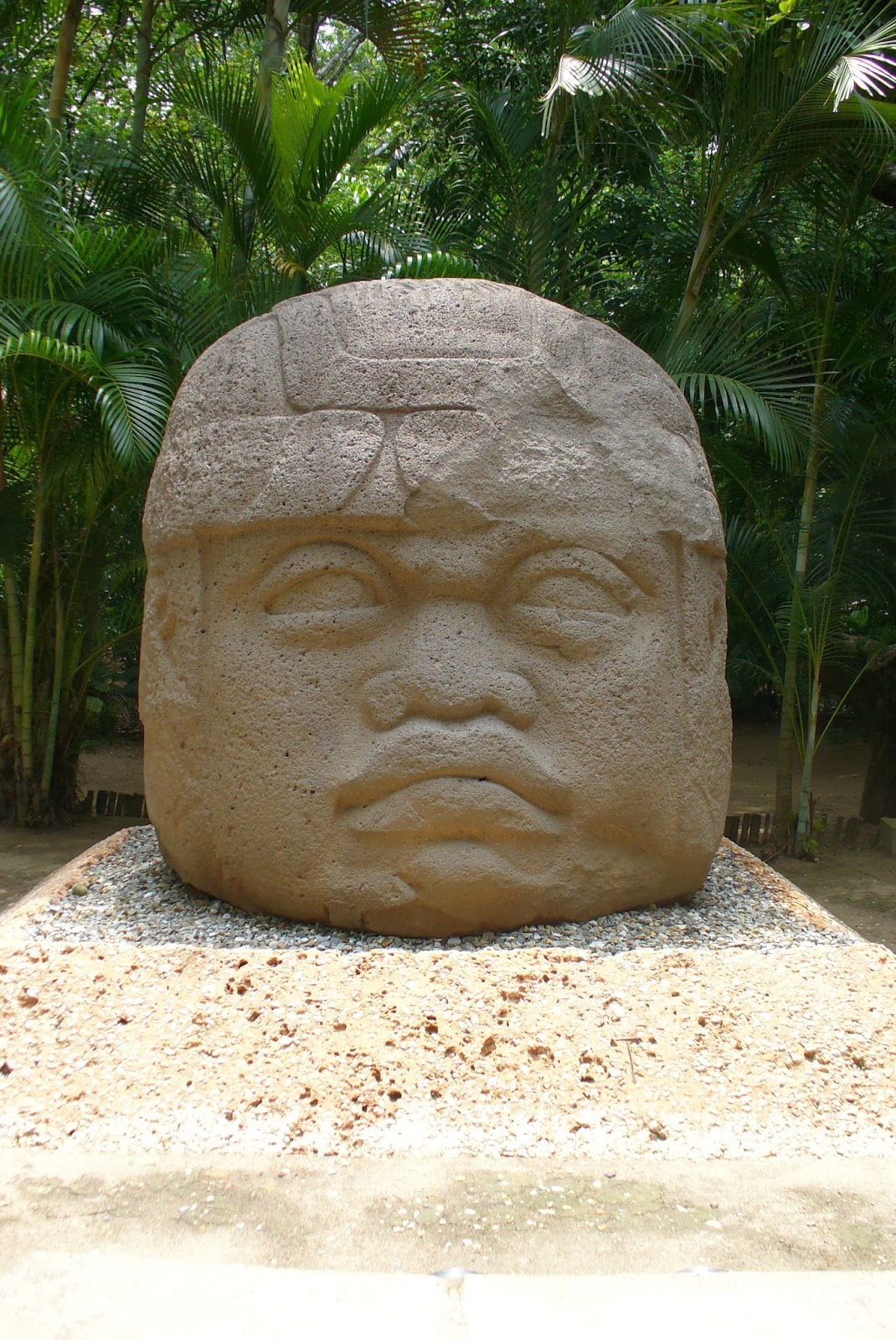
Based on our excursion, we created a virtual field trip to Veracruz, México, where our students would encounter and analyze artifacts left by the Olmec.  The unit begins with a video of us walking through the museum of La Venta.  We make it appear that we are trudging through the subtropical forests of eastern México and encountering a gigantic stone head (a classic Olmec artifact) at the end of our path.  We ask students to think like archaeologists and engage in collaborative discussions about the features of this artifact.  They generate a list of characteristics and begin to make conjectures and record guiding questions for the rest of the unit.

The facial features of these Olmec heads are unmistakably African and Asian.  This is fascinating to students, who have traditional worldviews of what they think Mexican people look like.  We take this opportunity to discuss the diversity of people living in México today, and to observe the diversity of our own classroom.  The Olmec heads help our students understand our common ancient history, and they begin to make cross-cultural, multi-racial connections.

Once we pique students’ interest in learning more about this mysterious civilization, we engage them in cooperative learning groups where they analyze the pictures we took of several Olmec artifacts found at La Venta and other museums in the region.  Again, they make observations, generate questions, and make conjectures about what we might be able to infer about the Olmec based on their artifacts. 

We then highlight specific Olmec symbols and their meanings, using materials from the de Young Fine Arts Museums of San Francisco, and teach the students how to reanalyze the artifacts with the specific purpose of looking for these symbols.  They apply their understanding of iconography by designing their own “Olmec” artifact and writing an expository paragraph to explain the meaning behind their artifact.  We display the pictures of these artifacts in the classroom as part of a mock archaeological dig called the “Olmec Art-ifact” wall.

This investigation serves as a wonderful launch to a more thorough investigation of the Mayan civilization.  Equipped with background knowledge about how to think like archaeologists, our students are able to analyze Mayan artifacts and structures.   They also use their critical thinking skills to make conjectures about the rise and fall of the Mayan city-states.  Because there is a wealth of written materials and primary sources with which to teach about the Maya people, we are able to integrate social studies, language arts, math and science into this unit.

Beginning with an experiential investigation, based on a virtual field trip to this region, students are inspired to make new connections and to deepen their understanding of thousands of years of human history.  With their blend of various racial characteristics and their location in Mesoamerica, the Olmec are a fascinating way for students of all races and ethnicities to see themselves reflected in their learning.  The Olmec also taught me that when traditional textbooks do not provide the learning experiences that students will find compelling, it is up to us to find creative ways to design them. 


Sunday, December 8, 2013

Common Core, Collaboration, and Cartoneras...Oh My!

It all started with a piece of cardboard.  

A while back, a co-worker of mine mentioned the cartonera movement as a way of engaging learners in my Spanish Language Arts classroom.  Always thinking it sounded like something I wanted to do as part of my instruction, I tucked it away until the right opportunity presented itself.  This past summer, while participating in a district-level realignment of our Spanish and English language arts curriculum to the Common Core State Standards, I discovered that the cartonera would be the perfect vehicle for integrating Spanish and English language arts with social studies and art to build bilingual language proficiency and family engagement for students in our school

The title of this unit, Cartoneras:  cuentos sobre la comida y la cultura (Cartoneras: Stories About Food and Culture), indicates what we studied for the first quarter.  Sixth grade students began the year learning about diversity and creating their own classroom community.  They were also studying narrative writing.  The cartonera project is exactly that on a larger scale.  Cartoneras are beautiful books made from recycled cardboard and distributed by publishing co-ops that began in Latin America and have spread to many places in the world.  The purpose of cartoneras is to build community, create art, and continue to publish literature at an affordable price for the public. Throughout the quarter, students would read and write various stories about culture, celebrations, and food.  Their finished product was to make their own cartonera to be displayed in our school.

To design this unit, the 6th grade English Language Arts teacher and I, the 6th grade Spanish Language Arts teacher, collaborated to discuss the goal of the unit.  Because SLA and ELA have the same language arts standards (Spanish Language Arts is a fifth core academic period for students in our bilingual program), we wanted to make sure that we co-planned our instruction so that students would not be subjected to the same lessons between our two classes.  We outlined the theme (culture and food), and chose two mentor texts (novels) that would support that theme.  The two texts we chose had copies in English and Spanish. They were also comprised of vignettes, short stories that could be taught in the time frame we were given. We agreed on which chapters of our mentor texts would be taught in Spanish and which would be taught in English.  We then decided that the purpose of working with these texts was twofold:  1.  to make connections to the cultural celebrations and food discussed in the vignettes, and 2.  to teach students how to analyze the parts of a story and then use that understanding to write their own narratives about a celebration or family cultural event that also involved food.  Everyone had to write a narrative in English, and the students in my class had to also write a different narrative in Spanish.  

In my Spanish Language Arts classroom, students spent the first three weeks working with oral storytelling in Spanish, while the English Language Arts teacher used children's books in English to identify the components of a narrative.  During the second three weeks, we expanded to use the chapters from the novels we had chosen as mentor texts.  In Spanish Language Arts, students read three different chapters in Spanish, analyzed them, and drafted three short stories about their own cultural events that were thematically-connected to the ones they read about.  In English Language Arts, students read different chapters in English, and did the same kind of writing.  For the final three weeks, students in each class chose two different drafts to finalize and publish--one story in English and one story in Spanish.  The students then created cartoneras in which to place their published stories.

The cartonera was an authentic purpose for students to present their writing in a creative way.  By blending art with this writing assignment, students were able to express themselves visually and linguistically. Their stories are also complete with a recipe for the food described in the event from their personal narrative, and we are planning to host a family potluck as the culminating event.  Families will be able to share their culture, build community, and take pride in their children's work, all at a collaborative event held at our school.  

Who could have guessed that a little piece of cardboard would become a unique way of showcasing students' talents and inviting families to our building?  

Sunday, November 3, 2013

Changing the Perception of English Language Learners Through an ESL/Bilingual Skills Class

"Why am I in this class?  I know how to speak English!"
"ESL is for kids who don't know English!  I don't want to be in here!"
"How can I get out of this class?"

I was shocked to hear these comments from my students the first year I took a new position as an ESL "unified arts"/"exploratory" teacher in my middle school.  Our school is committed to full-inclusion, and for three years prior, I had been a social studies/language arts teacher whose main job was to teach these two content areas and adapt my instruction to build language proficiency for the ELL's that were on my team. Having built a positive rapport with students in the building, I took for-granted that students would totally accept a stand-alone class taught by me.

Students in my school all receive ESL and special education services through their core instruction.  Because we teach them that we all have different learning needs, students are often unaware of differentiation and curriculum supports their peers are receiving in class.  Generally, they are very supportive of each other's learning, and respect their needs.  Creating an ESL/bilingual skills class, to give them an extra hour of language instruction a day, rocked this full-inclusion boat as students, who were used to being educated together, began to be physically separated for certain instructional hours in the day.

To change the student perception in my school about the ESL/bilingual skills class, I had to create an environment where the students felt safe and respected so that they were able to learn.  This meant: addressing stereotypes associated with ELL's, explicitly teaching students about language proficiency and academic language at the middle school level, and empowering students to embrace their bilingual/multilingualism and to see themselves as fully-capable, high-achieving learners.

The most common stereotype associated with ELL's is that their English language proficiency is an indicator of their intellect.  In the worst case scenario, people believe that they cannot learn until they have mastered English (something that research shows takes seven to ten years!).  One of the first things students learn in my class is that there are many ways to show what they know and that language is just one of these ways.  I also teach them that, because of their unique positions as English Language Learners, some of whom have also lived in other countries or gone to school in different places, they are highly intelligent and have many interesting things to teach us. We talk about what school is like in other places around the world, and celebrate students who attend Saturday culture schools.  I look for opportunities to highlight students' knowledge about subjects that are unique, and constantly tell them how much I appreciate them for teaching me new things everyday.

In addition to teaching my ELL's that they are intelligent, I explain to them that my class is about giving them the academic language they need to express their intelligence in interesting ways.  We do a lot of work differentiating between academic and social language. Many of my students are well-versed in their social language, and this causes teachers to assume they understand everything that is happening in class.  Without structured academic language support, however, our ELL's miss deep concepts in core instruction and do not make progress in their language comprehension.  I am very clear with students that our class is a place for them to practice using and understanding academic language (or the "language of school").  I challenge them to use this language in their core instruction so that they are prepared for high school, where the language gets even more complicated.

One of the ways we build academic language comprehension is to help students see how their other languages actually help them develop academic English.  For speakers of romance languages, I encourage students to find cognates (words that sound similar and are spelled similarly, with the same meanings between languages).  When students are taught to see their bilingualism as an asset, they feel a sense of pride in themselves as learners and they are more willing to take on academic challenges.  We routinely talk about the long-term benefits of bilingualism:  the range of job opportunities, travel, friendship, and education that can be had because of being bilingual/multilingual.  This change in tone--from bilingualism as a deficit to an asset--recently resulted in a significant number of students self-selecting English 9 Honors, Hmong for Hmong Speakers, and Spanish for Spanish Speakers as they chose courses for high school.  In previous years, our Spanish speakers, presumably ashamed of their Spanish, chose to take French, if they took any language at all.  I am overjoyed to see that they are reclaiming the honor in their home language as well as challenging themselves with the English Honors course.

In conclusion, over the past three years, I have successfully built a program that has changed the way ELL students see themselves as learners.  They are empowered, know they are intelligent, see bilingualism as an asset, and are building the language comprehension they need to access higher level instruction.  The most recent comment I heard from a student about my class is that it's his favorite class of the day.  What an amazing positive change from the negativity I experienced three years ago!


Sunday, October 27, 2013

Taking Time for Students: Doing What is Right for Students Given New Constraints in Education

Am I teaching content to students, or am I teaching students how to access and learn content?  

This is the fundamental question that guides my teaching practice on a daily basis.  

If I decide that I am teaching content to students, it means that the material I am teaching is more important than the students I am teaching.  I might find myself rushing through lessons so that I can prove to my administrator that I "finished" them and am ready to move on to the next, regardless of how well my students were able to acquire the skills and knowledge taught through that lesson.  I might overlook the fact that several of my students failed a test, and chalk it up to the fact that they just "didn't try hard enough."  Or I might send students off with homework that they are unable to complete independently, leaving them to fend for themselves, hopefully finding an outside resource to help them learn what I should have taught them during their school day.

Recent trends in education reform are pushing teachers to teach more with less, at breakneck speed, and without depth or responsiveness to individual students' abilities. This is encouraging many teachers to teach content to students instead of teaching students how to access and learn content.  Tragically, this is also resulting in lower student performance, higher teacher turnover, and overall public dissatisfaction with their local school systems.

If we are going to reverse the current trends in education, we have to re-focus on why we chose to teach in the first place: to teach students.  

Creating a student-centered classroom in the fast-paced, dehumanized world of standardized tests and Common Core scope and sequence is a challenge, but I know that we professionals are capable of rising to the challenge.  

We might not be able to control the curriculum that comes our way, but we can find ways to inspire our students to make connections and investigate topics outside of the classroom.  We cannot control the standardized tests, with their "trick" questions and cultural bias, but we can humanize our students by working with them to set reasonable goals for themselves, being transparent about what their scores mean and what skills they can work on to improve their performance, and celebrating their individual accomplishments.  Ultimately, we cannot control the time demands set upon us, but we can choose to take the time we have to be student-centered educators and to share resources, strategies, and ideas to support each other in this work.

As a student-centered bilingual educator in the new world of Common Core, I have created opportunities for my students to access and learn content in several ways.  I am taking the time today to share with you some of these strategies so that you might find yourself empowered to continue doing so as well.
  
First, I take the time to provide a safe environment for students to try new things and express new ideas, where they feel comfortable making mistakes and trying again.  This is done through community-building activities and creating classroom working agreements that facilitate a collaborative culture in our room.  I continuously ask students for input into topics of study or activities we could do as a class, and I have a suggestion box for students who want to communicate with me anonymously about anything that is happening in class.  I also celebrate student work and frequently use their writing as exemplar texts to analyze as a class, teaching students how to provide and receive constructive feedback.

I also take the time give students plenty of reasons to trust me to guide them in their learning, allowing them to see me as an advocate for them as learners.  This means that I am open and honest with students about what it means to be an English Language Learner, using examples of my own status as a Spanish Language Learner to show challenges that even I encounter as a bilingual person who is fluent in two languages. I empower students in their education by teaching them about the history of laws surrounding bilingual and ESL education, highlighting stories from people who were English Language Learners in classrooms before ESL became a right.  We confront stereotypes about English language proficiency and intelligence, and I have taught my students that, as their ESL teacher, I am teaching them language and study skills that they need to access their core education when they leave my classroom.  I am not a "remedial" teacher and they are not "remedial" students.  In fact, they are highly intelligent because they are "doing school" in a language that is new to them!  I also encourage them to maintain their other languages knowing it will provide them with greater opportunities in life because the world needs more multilingual/multicultural people.

Finally, I take the time to get to know students as people so that I can spark their fire for lifelong learning.  This process is much less concrete, and can be affected by so many other life circumstances, but my purpose as an educator is to make connections to the students' lives.  This means finding a real-world application for everything we ask students to do in school, so that when they ask why they have to learn something I always have a real-world answer.  Does the student want to own his own auto shop?  Then he'll have to know how to use language and problem-solving skills to write a business plan, read invoices, communicate effectively with clients and workers, and understand and apply knowledge from auto manuals.  Does the student enjoy writing, but not see it as a viable career?  Then show her real world examples of authors who did other jobs while building their craft and getting published.  Does the student feel lost, not knowing what he wants to do in life?  Help him explore all kinds of topics, independently and collaboratively, connected to what he enjoys doing in his spare time.

In closing, if we are going to teach students to access and learn content, we must first get to know each of them as people. We have to know what their interests and skill sets are, what their future goals may be, and how they see themselves as learners.  We then must build a climate of trust so that they will see our instruction and methods as valuable learning opportunities that utilize their input and will help keep all options for them as they become more independent.  We must also empower them to challenge existing stereotypes and know their own history so that they can advocate for their own learning.  

If we want students to achieve, we need to provide the right environment for them to do so.  This means trusting that by taking the precious time to do so, we will cultivate high achievers and lifelong learners.  I believe we can.  And I know that we will.

Tuesday, October 1, 2013

*Umoja*Unidad*Unity*We Are One*

Dear Friends,

As our school district goes through the latest round of administrative restructuring, it is becoming more and more clear that we are being guided by the principles of the corporate education reform movement.  My school, with all my wonderful, bright, caring and diverse students, has recently been officially labeled an "intensive intervention" school.  This is because our students are supposedly not making enough progress on their standardized tests.  When we look at the data about who is testing poorly, we see that they are generally all English Language Learners and students of color who all happen to be living in poverty.  Coincidence?  I think not.

I can send you copies of examples of this standardized test to prove my assertion that the tests are written with a Eurocentric, monolingual focus, that presumes access to a wealth of literature and information outside of the classroom, but suffice to say that there are reading comprehension questions on it that require extensive background knowledge about things like blacksmiths, classic literature, advanced mythology, and "bake pasta," whatever that is.

As a result of our scores, teachers are now required to teach an extra class at the end of the day that is either an intervention for struggling learners, an extension for advanced learners (i.e. the white kids), or something in-between that they need to create on their own for the kids in "the middle."  They are being told that the materials for the interventions are "on order," so the teachers are frantically spending their planning time (or being put in a position to ask their student teachers to waste their apprenticeship time) making copies of curriculum books and teacher guides so that they are ready to teach these classes starting next week.  They have been given no standards or goals for the students to reach to exit out of such classes, and the children's parents have not been notified, nor has permission been sought or given.  I could tell you all about how absurd this curriculum is, but will spare you the pathetic details.  The teachers are also not trained in how to use this curriculum, and had to take "crash courses" in it yesterday afternoon.

The "extension" course for the "advanced" kids is already packaged up, sparkling new, and ready to go! Each teacher has his/her own kit full of brand new books and teaching materials.  They don't really have to prepare much because, by nature, the "advanced" kids love school, feel positive about being there, and are excited about learning.  Wouldn't you if you were always getting positive reinforcement?  There is absolutely no equity in this situation.

I'm watching school closings from around the country, and can't help but make the connection that I, too, will be shut down, and my students will have their civil rights taken away from them.  I don't know what to do, except continue to teach and write about what is happening.  Maybe someone, somewhere will care, and I will be inspired by a new generation of civil rights leaders.

Here's the latest on what happened in Philadelphia.  Give us a couple years, when our "interventions" don't lead to student progress on standardized tests, and I will be sending you the same kind of video with my face on it.

http://www.mediamobilizing.org/ourschools

Sincerely,
Scholastic Chaos
*umoja*unidad*unity*we are one*